
Neilson Street Warehouse Development
Commercial
Green Buildings
Architect: JWA Architects
Location: Onehunga, Auckland
Client: Argosy Property Limited
Completed: 2025
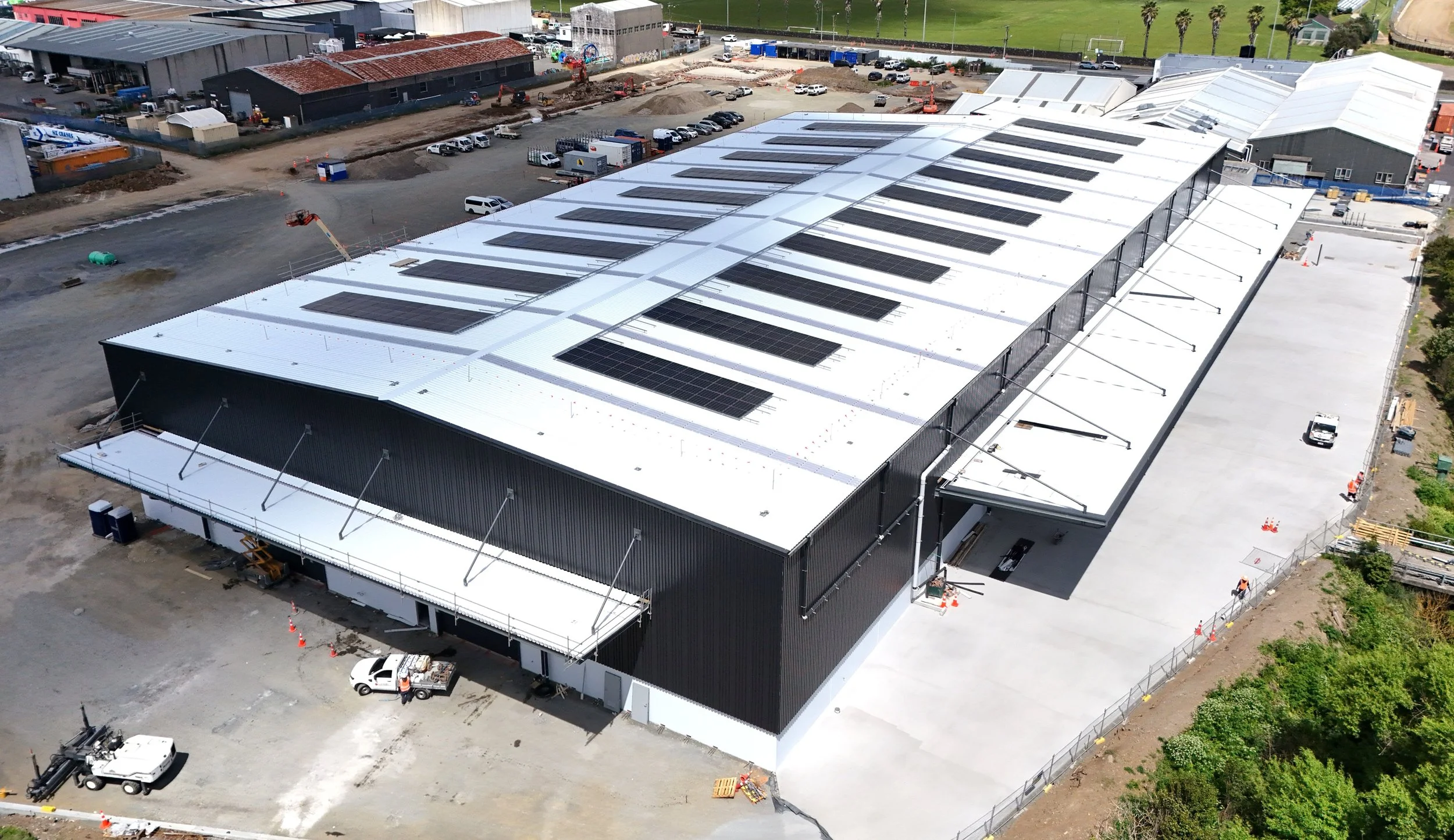
The redevelopment of Argosy’s strategic industrial site at 224 Neilson Street represents a major milestone in sustainable logistics infrastructure. Warehouse A and Warehouse B form the core of Argosy’s flagship industrial precinct, designed to support next-generation warehousing while achieving a 6 Star Green Star Design & As Built rating, recognising world-leading sustainability performance. Together the buildings provide over 18,900 m² of warehouse space, supported by modern office areas, expansive yard space, and a 3,201 m² breezeway, creating a highly functional logistics environment that integrates operational efficiency with advanced environmental performance.
Our team provided a comprehensive range of engineering and sustainability services across the project. This included mechanical services design, hydraulic services design, ESD consulting, and as the GSAP, preparation of the Green Star documentation. We also carried out detailed energy modelling to optimise building performance and a life cycle assessment to evaluate and reduce the long-term environmental impact of the development.
Sustainability performance was a central focus throughout the design and construction. Both warehouses achieved 6 Star Green Star Certified Built ratings, with Warehouse A achieving 80 points and Warehouse B 85.8 points. Extensive energy efficiency measures significantly reduce operational energy demand, with energy use reduced by 66% in Warehouse A and 38% in Warehouse B compared with reference buildings. Large rooftop solar arrays of 480 kWp and 224 kWp generate far more electricity than the buildings consume, producing approximately three to nearly four times the annual energy demand, effectively enabling net positive energy performance while also future proofing the site for electric logistics vehicles. Argosy also intends to offset the buildings’ upfront carbon, including the energy use and emissions associated with the extraction, transportation, and manufacturing of materials, as well as the construction of the buildings and site works.
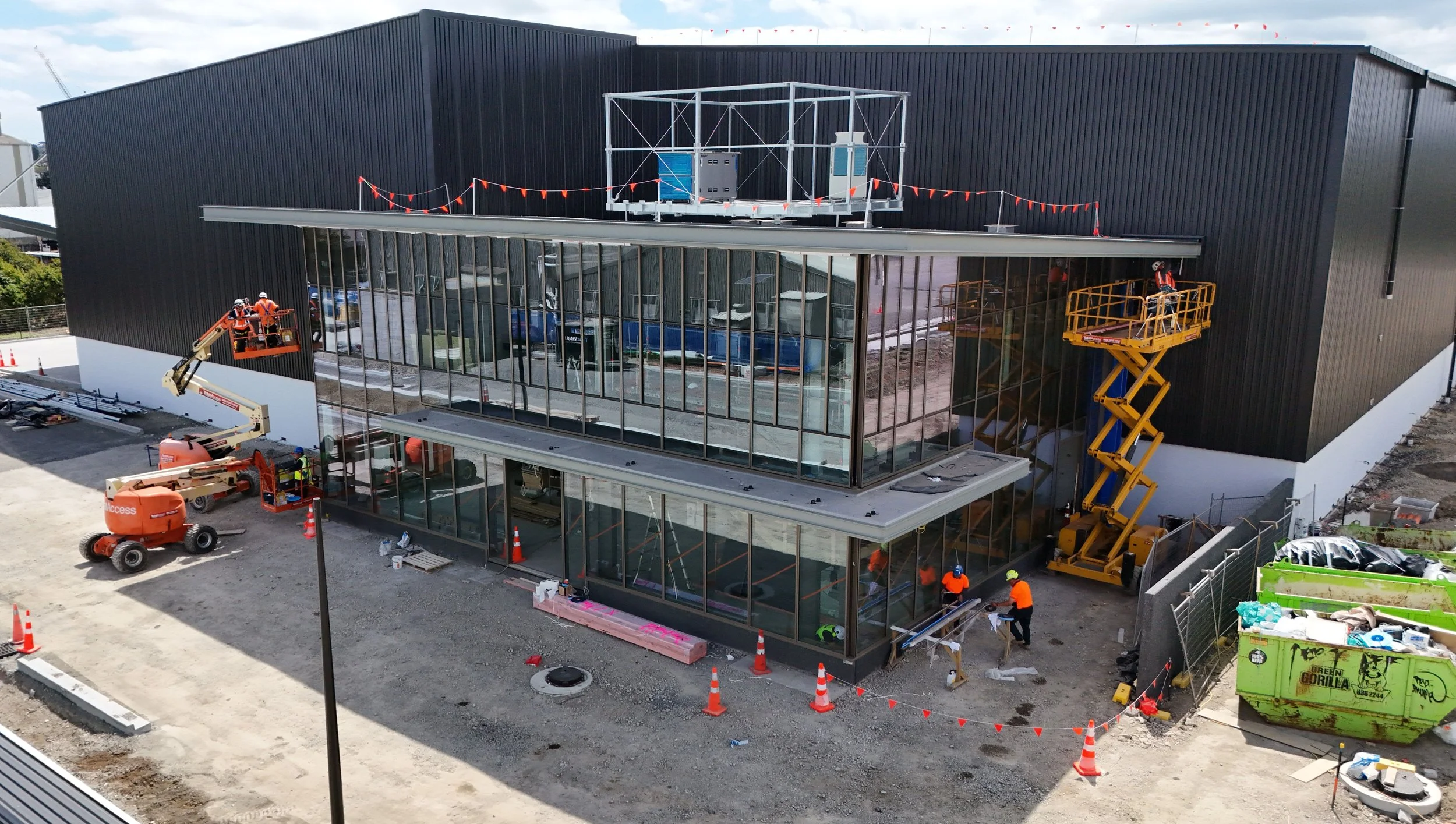
The project also demonstrates strong environmental leadership through careful material selection, carbon reduction, and resource efficiency. Peer-reviewed life cycle assessments show lifetime carbon reductions of 38.5% and 32.5%, supported using low-carbon materials, high levels of certified timber, and significant reductions in upfront embodied carbon. Water efficiency initiatives reduce potable water use by 68–73.5%, while construction practices diverted over 95% of waste from landfill. The project also incorporated innovative sustainable site practices, including solar-powered site facilities, rainwater harvesting for site amenities, and the recycling of excavated basalt and other materials.
Environmental restoration formed another key element of the development. The redevelopment transformed a heavily contaminated former pipe manufacturing site through extensive remediation, including the innovative reuse of 4,000 m³ of asbestos-impacted concrete beneath Warehouse A’s raft slab. In parallel, more than 2,600 m² of habitat was restored along the previously degraded Captain Springs stream corridor, including bank stabilisation, native fish relocation, and riparian planting. These works now represent over 18% of the site area and contribute to broader ecological improvements across the surrounding industrial precinct.